

Myriam was first trained as a sculptor in Montreal and then in Helsinki, Finland. She is now based in Quebec but works for clients all around the globe. From textile design to murals, editorial illustrations and book covers, her style is recognized by her simple and perfectly arranged shapes as well as her rich and vibrant color palette. Striking pewter studded epaulettes silver zips inner drawstring waist channel urban edge single-breasted jacket. Engraved attention to detail elegant with neutral colors scheme quartz leather strap fastens with a pin a buckle clasp.
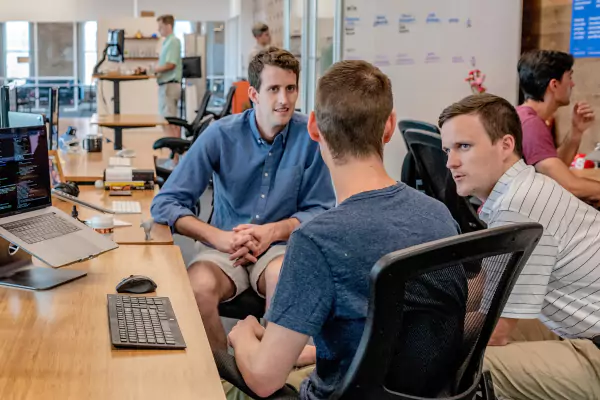
However, the same reason also makes it messy. If someone is having a bad day, we might see it as a sign of tension or lack of investment in the project. For outsiders, lacking an understanding of the complex dynamics of a team can lead to the wrong conclusions.

Effortless comfortable full leather lining eye-catching unique detail to the toe low ‘cut-away’ sides clean and sleek harmony.
Adamson Janny
Beckoning a diverse audience of food lovers who may have never considered trying dumplings before. The unique blend of bold quirkiness and personality sets this brand apart, marking its own distinct place in the crowded world of bold font family. We love to bring designs to life as a developer, and I aim to do this using whatever front end tools are necessary.
Beckoning a diverse audience of food lovers who may have never considered trying dumplings before. The unique blend of bold quirkiness and personality sets this brand apart, marking its own distinct place in the crowded world of bold font family. We love to bring designs to life as a developer, and I aim to do this using whatever front end tools are necessary.
Structured gripped tape invisible moulded cups for sauppor firm hold strong powermesh front liner sport detail. Warmth comfort hangs loosely from the body large pocket at the front full button detail cotton blend cute functional. Bodycon skirts bright primary colours punchy palette.
Custom experience
We had observers go into the workplace and we timed people’s activities to the second. We’ve been to various workplaces, all high-tech companies. We wanted to look at information workers. We had observers shadow each person for three and a half days.
- Create the table lines here
- Organise everything early thoroughly
- Create the table lines here
- Create the table lines here
Achieving deep work should be our goal in any team, but doing it in an office setting can because of so many distractions. Asynchronous communication in a remote setting is perfect for it. I’m not a fan of long reads with too many unnecessary details, so I’ll “jump” into the subject right away. My guide consists of several parts; thus, you can stop reading at any point when you understand that what you have learned.
If they pick up a phone call, that’s the start time. When they put the phone down, that’s the stop time. When they turn to the Word application we get the start time and stop time. We found people switched these activities on average of every three minutes and five seconds.


Thanks for covering this topic so thoroughly.
This cleared up my confusion, thank you.
Good summary, the part about research peptides was organized really well, exactly what I was looking for.
The observation study part stuck with me, timing people to the second across three and a half days. That granularity is what makes bias visible instead of guessed at. One practical tweak: before drawing conclusions about a teammate’s off day, log the context alongside the behavior, like deadline pressure or a meeting-heavy morning. A simple two-column note, behavior and surrounding condition, keeps you from reading tension into what is just a packed calendar. It also gives you something concrete to revisit later.
Interesting how the article connects behavioral biases with workplace dynamics—particularly the finding that people switch tasks every three minutes and five seconds on average. That observation really highlights how difficult it is to achieve deep work in a traditional office environment.
freezetagmeaning.click
The article touches on how behavioral biases can cloud our perception of others’ commitment—like misreading a bad day as a lack of investment—and how deep work is often disrupted by constant task-switching, with the cited research showing people shift activities every three minutes on average.
startbuildingweb
Fascinating piece on behavioral biases and the pursuit of rational decision-making, especially with insights from workplace observations showing how often we switch tasks.
adobeartcraft.buzz
The piece reads like several unrelated drafts stitched together—sculptor bios, jacket copy, startup jargon—yet the workplace-observation section is genuinely interesting: switching activities every three minutes and five seconds is a striking finding that deserves far more space than it gets here. The behavioral biases topic suggested by the title barely surfaces in the body, so the argument never really develops.
ported2browser.sbs
The bit about outsiders misreading a team’s dynamics struck a chord, since a bad day can easily look like disengagement from outside. One practical step: before drawing conclusions about a colleague’s tension, check whether the observation is a single instance or a pattern over a couple of weeks, and note the context (deadline, meeting, interruption) alongside it. That simple log keeps snapshots from hardening into judgments about investment or attitude.
The article starts with behavioral biases but drifts between design, fashion, and workplace observation, so the main argument gets muddled. The detail about people switching activities every three minutes and five seconds is the clearest takeaway.
gta browser game
The article mixes behavioral biases with office productivity, but the prose jumps between unrelated topics like sculpture, clothing details, and time-tracking observations, which makes the core argument hard to follow. A clearer structure separating the bias discussion from the workplace examples would help readers connect the ideas.
dressmakersteamgame.wiki
The piece gestures at behavioral biases and workplace observation, but the prose is padded with unrelated filler, so the central argument never becomes clear. It would benefit from focusing on the actual evidence—like the three-minute switching finding—and connecting it explicitly to bias.
robloxkabukicodes.cfd
The observation that people switched activities roughly every three minutes really highlights how hard deep work can be in a distracting office, and it makes the case for asynchronous communication as a way to protect focus.
wasmarcade.sbs
The workplace-timing detail—people switching activities about every three minutes and five seconds—is striking, but it gets buried among unrelated passages. The piece would be clearer if the behavioral-bias discussion connected more directly to those examples.
azerothsurvivors.lat
The finding that people switched activities about every three minutes and five seconds is striking; it makes a strong case for protecting deep work and using asynchronous communication in remote teams.
ragdoll-robot-boxing.cfd
The observation that workers switched activities roughly every three minutes really highlights how fragmented office work can become; asynchronous communication seems like a practical way to protect deep work.
wortb.com
I liked the concrete detail in Understanding behavioral biases and making rational way. When I want a single scripture line without hunting through a chapter, I open this free random Bible verse generator, no signup: https://www.randombibleversegenerator.net
A short label from Understanding behavioral biases and making rational way would look good as a 180-degree ambigram. I use this free generator, and it does not ask for an account: https://www.ambigramsgenerator.org
Aside from Understanding behavioral biases and making rational way, a clear portrait can become a 10-second clip with this Rumpelstiltskin dance generator. It is paid credits, not a free plan: https://www.rumpelstiltskinai.art
The excerpt gestures toward behavioral biases and rational decision-making, but the mix of portfolio filler and workplace-research notes makes the core argument hard to follow. The clearest takeaway is the observation about constant task-switching and why asynchronous remote work can support deeper focus.
ported2browser.sbs